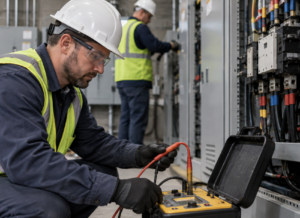
Electrical safety may not be the first subject that comes to mind when people think about Oklahoma’s growing technology sector, but reliable electrical systems are behind nearly every modern workplace. Computers, communications equipment, automated machinery, data systems, manufacturing controls, and connected devices all depend on electricity operating safely and consistently. For businesses in Duncan and throughout southern Oklahoma, that makes electrical testing an important part of protecting both employees and the technology they rely on every day. ⚡
Dielectric testing is one of the tools companies can use to determine whether electrical insulation and protective equipment can safely withstand the voltage it may encounter in service. The process helps identify insulation that has deteriorated, been damaged, or otherwise may no longer provide the level of protection expected from it.
That matters well beyond traditional electrical contractors. Oklahoma companies increasingly operate in environments where industrial equipment, digital technology, communications systems, electrical infrastructure, and workplace safety overlap. Preventing an electrical accident can protect workers, reduce unexpected downtime, and help keep the systems businesses depend on operating normally.
Electrical Safety Is Also an Oklahoma IT Issue
Technology has become deeply connected to physical infrastructure. Servers, networking hardware, security systems, automated equipment, manufacturing controls, telecommunications equipment, sensors, and cloud-connected devices may look like an IT concern on the surface, but none of them function without reliable electrical power.
Oklahoma is already treating reliable technology infrastructure as an important part of statewide operations. The Oklahoma Office of Management and Enterprise Services Information Services describes technology as a strategic investment and oversees shared services, technology resources, standards, infrastructure, applications, and network operations for state agencies.
That same relationship between technology and infrastructure exists inside private businesses. A company can invest heavily in advanced equipment and sophisticated software, but physical failures can still interrupt operations. Electrical insulation that has weakened over time is one example of a problem that may remain largely invisible until testing identifies it or a failure occurs.
For Duncan businesses, regular attention to electrical safety therefore supports more than traditional accident prevention. It can contribute to equipment reliability, operational continuity, employee protection, and the stability of technology-dependent workplaces.
What Dielectric Testing Actually Does
A dielectric withstand test applies a controlled electrical voltage to insulating material or electrical equipment to determine whether the insulation can withstand the electrical stress without breaking down.
The concept is sometimes known as a high-potential or hipot test. Wikipedia’s overview of dielectric withstand testing describes it as an electrical safety test used to evaluate the effectiveness of insulation between electrical components or between energized parts and ground.
The underlying principle is straightforward. Electrical insulation is intended to prevent current from traveling where it should not. Age, exposure to heat, moisture, physical damage, chemicals, contamination, repeated use, and other workplace conditions can affect that insulation.
A visual inspection remains important, but appearance alone does not always reveal whether insulation will perform correctly under electrical stress. Testing gives businesses an additional way to evaluate protective equipment and identify potential weaknesses before they contribute to a dangerous situation.
For companies seeking qualified local testing services, Dielectric Testing Duncan OK provides information about dielectric testing for businesses and organizations operating in the Duncan area.
Why Preventive Testing Matters Before Something Goes Wrong
Electrical failures can develop gradually. Protective equipment may look serviceable while its insulating capability has weakened. Components can experience wear without producing an obvious warning. Damage may be small enough to escape routine observation but significant enough to create risk when the equipment is exposed to operating voltage.
Preventive testing shifts the emphasis from reacting to failure toward identifying problems earlier.
The Occupational Safety and Health Administration identifies insulation, guarding, grounding, electrical protective devices, training, and safe work practices among the methods used to control electrical hazards in workplaces.
OSHA requirements also address the testing of electrical protective equipment. Under OSHA’s electrical protective equipment standard, certain insulating equipment must undergo periodic electrical testing designed to determine whether it can withstand the voltages involved.
For employers, this reinforces an important point. Electrical protection is not something that can simply be purchased once and assumed to remain effective indefinitely. Equipment condition has to be managed throughout its useful life.
Duncan Businesses Depend on More Connected Equipment Than Ever
The modern Oklahoma workplace contains far more electronically controlled equipment than it did a generation ago.
Manufacturing operations may rely on programmable controllers, sensors, automated machinery, digital monitoring platforms, and connected maintenance systems. Offices depend on computers, servers, telecommunications equipment, wireless networking, security technology, and backup systems. Energy-related companies operate equipment that combines electrical components with increasingly sophisticated digital controls.
The National Institute of Standards and Technology has highlighted the importance of industrial control systems and operational technology within the nation’s energy infrastructure. These systems include devices that help control power generation, transmission, oil and gas operations, and other critical industrial processes.
Although cybersecurity and electrical safety address different types of risk, they share an increasingly important principle: modern technology cannot be separated completely from the physical systems supporting it.
A secure computer network does little good if a preventable electrical failure takes equipment offline. Likewise, advanced machinery cannot deliver productivity if unsafe components create risks for the people responsible for operating or maintaining it.
For Oklahoma IT leaders, facility managers, contractors, manufacturers, utility-related businesses, and industrial operations, technology reliability increasingly requires attention to both digital and physical infrastructure.
Testing Can Help Protect the People Behind the Technology
Equipment protection is important, but employee safety remains the most important reason for maintaining effective electrical safeguards.
Workers in electrical, utility, manufacturing, energy, construction, industrial, telecommunications, and maintenance occupations may encounter electrical hazards as part of their jobs. Protective equipment is often one of several safeguards used to reduce that risk.
OSHA regulations covering electrical protective equipment require periodic electrical tests for certain insulating products and specify that testing methods must reliably indicate whether the equipment can withstand the voltages involved.
The National Fire Protection Association also publishes NFPA 70E resources addressing electrical safety-related work practices and maintenance in the workplace. The standard has become an important reference for organizations developing programs intended to reduce employee exposure to electrical hazards.
Testing does not replace proper training, procedures, inspections, personal protective equipment, or safe work practices. Instead, it supports a larger safety program by giving organizations information about whether insulating equipment continues to perform as intended.
Electrical Reliability Supports Business Continuity
A workplace accident can have consequences extending far beyond the immediate event. Operations may stop. Equipment may require inspection or replacement. Production schedules can be disrupted. Employees may be unable to continue working in an affected area until hazards are addressed.
For technology-driven businesses, even a relatively short disruption can affect digital systems, communications, customers, scheduling, production, and data access.
The State of Oklahoma recognizes business continuity as a significant technology concern. Oklahoma IT Operations includes incident management, disaster recovery, configuration management, and continuity planning among the functions supporting state technology services.
Private businesses face the same basic challenge on a different scale. Reliable operations depend on identifying vulnerabilities before they become disruptions.
Dielectric testing fits naturally within that preventive mindset. Instead of waiting for insulating equipment to fail during use, testing can reveal whether equipment still meets appropriate performance expectations.
For Duncan companies that rely heavily on electrical and electronic equipment, preventive maintenance becomes part of protecting the broader business operation.
The Electrical Grid and Digital Economy Are Increasingly Connected
The relationship between electricity and information technology extends far beyond individual workplaces.
The U.S. Department of Energy describes the American electrical grid as an interconnected system of transmission lines, transformers, sensors, software, communications systems, and other equipment. Modern grid reliability increasingly involves both traditional electrical hardware and digital technology.
That same convergence is happening within businesses.
Factories use connected sensors to monitor production. Energy companies use computerized systems to supervise equipment. Warehouses use automation and digital inventory platforms. Offices depend on network-connected security, communication, and building systems. Even smaller businesses rely on technology infrastructure that would have been considered highly advanced only a few decades ago.
This convergence means electrical reliability deserves a place in Oklahoma IT conversations.
The smartest software platform in the world still needs stable power. Automated equipment still needs safe electrical components. Digital transformation still depends on physical infrastructure functioning correctly.
A Preventive Maintenance Culture Creates Stronger Operations
The most effective safety programs tend to treat maintenance as an ongoing responsibility rather than something triggered only by visible problems.
Employees inspect equipment. Records are maintained. Testing schedules are followed. Damaged items are removed from service. Maintenance requirements are reviewed. Qualified professionals evaluate equipment when specialized testing is required.
That approach can help organizations create a clearer picture of equipment condition over time.
It also reflects the risk-management philosophy already common throughout information technology. IT departments routinely install updates, monitor systems, replace aging hardware, maintain backups, and test disaster-recovery procedures because waiting for a failure is usually more expensive and disruptive than preparing for one.
Electrical safety benefits from the same preventive thinking.
Oklahoma’s technology leadership has emphasized resilience and prevention in the digital environment. Oklahoma Cyber Command, for example, describes a strategy built around identifying risks, establishing safeguards, monitoring threats, responding to incidents, and recovering effectively.
Electrical and cyber risks are very different, but the broader management lesson translates well. Organizations become more resilient when they identify vulnerabilities before those vulnerabilities become emergencies.
Dielectric Testing Has a Place in Oklahoma’s Technology Future
Oklahoma businesses are becoming more dependent on connected equipment, automation, digital communications, advanced manufacturing systems, and data-driven operations. That transformation creates tremendous opportunities, but it also makes dependable infrastructure increasingly important.
Duncan occupies a part of the state with strong ties to energy, industry, transportation, skilled trades, manufacturing, and business services. Many organizations operating in these sectors use electrical equipment or insulating protective products that require proper inspection, maintenance, and testing.
Dielectric testing may not receive the same attention as artificial intelligence, cybersecurity, cloud computing, or automation, but it supports the physical environment in which those technologies operate.
It represents something fundamental to successful technology adoption: reliability.
A business does not become technologically advanced simply by purchasing new equipment. It also has to maintain the environment that allows that equipment and the people using it to operate safely.
Conclusion
Oklahoma IT is no longer limited to computers sitting on desks or servers operating behind locked doors. Technology now reaches deep into manufacturing floors, energy operations, communications systems, warehouses, utilities, transportation, offices, and industrial facilities.
That makes electrical safety increasingly relevant to the wider technology conversation.
For Duncan businesses, dielectric testing provides a practical way to evaluate electrical insulation and protective equipment before hidden deterioration contributes to a failure. When combined with inspections, training, proper maintenance, workplace procedures, and established electrical safety practices, testing can become an important part of a broader preventive safety program.
The value goes beyond compliance. Reliable insulation helps protect workers. Preventive maintenance helps protect equipment. Fewer unexpected failures can support productivity and business continuity. Stronger physical infrastructure supports the digital systems Oklahoma businesses increasingly depend on.
As Oklahoma continues investing in more connected, automated, and technology-driven workplaces, some of the most important innovations will still depend on getting the fundamentals right. Electrical equipment must remain reliable, protective systems must perform as intended, and workers must have confidence that the safeguards surrounding them are being properly maintained.
For Duncan businesses, dielectric testing is one practical part of building that safer and more dependable technology future. ⚡