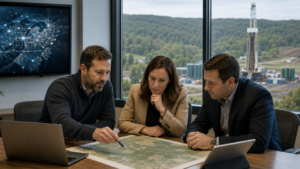
For many IT companies, property decisions usually center on location, internet access, electrical capacity, workforce availability, security, and long-term growth. A company may look at a building and think about server rooms, fiber connections, parking, employee access, zoning, and whether the space can support future expansion. Those details matter, but in Pennsylvania, there is another layer that business owners should understand before buying, leasing, developing, or investing in commercial real estate: mineral rights.
Pennsylvania has a long history tied to coal, oil, natural gas, and land development. Today, the state is also becoming increasingly important for broadband expansion, data centers, artificial intelligence infrastructure, cybersecurity, robotics, and technology-driven business growth. That combination creates an important connection between real estate decisions and subsurface rights. For IT companies, the issue is not just about what is sitting on the land. It is also about what may exist beneath it, who owns it, who can access it, and how that could affect the property’s long-term value and usability.
Understanding mineral rights Pennsylvania can help IT companies make smarter decisions when evaluating office buildings, data center sites, technology campuses, warehouse-style operations, or commercial land for future development. When handled properly, this knowledge can protect a business from unexpected complications and help leaders move forward with greater confidence.
Why Mineral Rights Matter to IT Companies
Mineral rights refer to the ownership rights tied to resources beneath the surface of a property, such as natural gas, oil, coal, limestone, or other minerals. In Pennsylvania, surface rights and mineral rights can sometimes be separated. That means one person or company may own the land above ground, while another party may own the rights to what is below the ground.
For an IT company, that may sound like a real estate issue that belongs to another industry. In reality, it can affect site selection, financing, construction planning, infrastructure security, and long-term property control. A growing IT company may purchase a building for headquarters, acquire land for a data center, or lease a commercial property near a fast-growing technology corridor. If the mineral rights were previously sold, leased, reserved, or transferred, the company may not have full control over the land in the way it assumed.
This matters because technology companies often need stable physical environments. They may rely on climate-controlled rooms, backup power, underground utilities, security systems, equipment pads, parking areas, loading zones, and expansion space. If subsurface rights create uncertainty, that uncertainty can affect how lenders, insurers, investors, and buyers view the property.
Pennsylvania’s Technology Growth Makes Property Research More Important
Pennsylvania is not only known for energy and natural resources. It is also a growing technology and innovation state. The Pennsylvania Department of Community and Economic Development highlights the state’s support for technology and innovation, including resources for technology companies, funding networks, and business growth programs.
This matters because IT companies are not always operating out of small office suites anymore. Many are looking at larger properties for managed services, cybersecurity operations, cloud support, software development, call centers, network operations, logistics technology, and AI-related infrastructure. As the footprint of IT businesses grows, real estate risk becomes more important.
The rise of technology property demand also means that more companies are evaluating land in areas that may have old mineral reservations, gas activity, utility easements, or historic industrial use. A property may look perfect from the road, but the deed history may tell a more complicated story. For IT companies, due diligence cannot stop at square footage and internet availability.
Data Centers, Energy Demand, and Land Use in Pennsylvania
Data centers have become one of the clearest examples of how technology and land use are now connected. IT infrastructure is physical. Servers, cooling systems, power systems, fiber networks, and security fencing all require land, energy, and long-term property stability.
Pennsylvania has seen increased attention around data center development. Reuters reported that Amazon planned a major cloud infrastructure investment in Pennsylvania, showing how the state is part of the larger national buildout for cloud computing and artificial intelligence. The Associated Press has also reported on the planned conversion of the former Homer City coal-fired power plant site into a large AI and data center campus, connecting Pennsylvania’s energy legacy with the future of digital infrastructure.
For companies exploring similar opportunities on a smaller scale, mineral rights can become part of the conversation. A property’s energy history, subsurface ownership, access rights, and mineral reservations may influence whether the site is truly suitable for a secure technology operation. IT companies do not need to be energy companies to be affected by energy-related land issues.
How Mineral Rights Can Affect Business Property Value
Commercial property value is based on more than the building itself. It is also based on control, future use, marketability, risk, and the ability to sell or refinance later. If mineral rights are unclear, separated, or subject to old agreements, the property may carry issues that affect value.
For example, if a company buys land assuming it owns everything connected to the property, then later discovers that mineral rights were previously reserved by another owner, that can create concern. A lender may want more information. A buyer may ask for documentation. An investor may view the property as more complicated. An insurer may require clarification. Even if no extraction activity is planned, uncertainty itself can slow down a transaction.
For IT companies that rely on clean balance sheets and predictable growth, this can matter. Property is often one of the largest business investments a company makes. When a technology company buys a facility, it may be planning years of growth, hiring, equipment investment, and infrastructure upgrades. Mineral rights research helps determine whether the property supports that future without hidden complications.
Broadband Expansion and Rural Property Decisions
Pennsylvania’s broadband expansion also creates new opportunities for IT companies outside major metro areas. The Pennsylvania Broadband Development Authority has reported major progress through the Broadband Equity, Access, and Deployment program, including efforts to connect remaining locations that lack high-speed internet service.
As broadband improves across rural and underserved parts of Pennsylvania, more IT companies may consider properties that were once less practical for technology operations. Lower land costs, more space, and improved connectivity can make smaller towns and rural areas more appealing. However, these same areas may also have more complex mineral histories tied to coal, oil, gas, or timber-related land transactions.
That means broadband access should not be the only factor in the property decision. An IT company may find a site with strong connectivity, good road access, and attractive pricing, but still need to understand the mineral ownership, deed restrictions, easements, and potential subsurface issues before moving forward.
Why IT Companies Should Care About Chain of Title
Chain of title is the historical record of ownership for a property. In Pennsylvania, reviewing chain of title can be especially important when mineral rights are involved. Older deeds may include language that reserves coal, oil, gas, or other minerals. Some reservations may be obvious, while others may require careful review.
An IT company does not need to become a land records authority, but its leadership should understand the importance of asking the right questions. Before purchasing or developing commercial property, the company should know whether surface rights and subsurface rights are unified or separated. It should also know whether any third party may have rights that could affect access, development, or future property use.
This is especially important for companies planning to install underground utilities, fiber lines, backup generators, cooling infrastructure, stormwater systems, or security barriers. Technology facilities are often built around reliability. Any uncertainty in land rights can work against that reliability.
Cybersecurity, Physical Security, and Property Control
In IT, security usually brings to mind firewalls, encryption, endpoint protection, backup systems, and compliance. However, physical security is just as important. A company protecting sensitive systems or client data must also think about building access, land access, utility routes, perimeter control, and infrastructure exposure.
If a property has complicated mineral rights or access rights, that may create questions about who can enter certain areas, under what conditions, and for what purpose. Even if those rights are never used, the existence of third-party rights may matter to companies that need high-security operations.
Pennsylvania’s government has also placed attention on technology, public protection, and emerging digital issues. For example, Pennsylvania lawmakers have addressed safe artificial intelligence use through the House Communications & Technology Committee, as noted in this Pennsylvania House release. As technology grows more powerful, companies must think about risk from every angle, including the physical real estate that supports their systems.
How Mineral Rights Can Affect Leasing Decisions
Not every IT company buys property. Many lease offices, commercial spaces, warehouse-style facilities, or flex buildings. Mineral rights may seem less important in a lease, but they can still matter.
A tenant may be responsible for improvements, network installation, server room upgrades, backup power, or business interruption risk. If the property has unresolved land rights issues, construction delays or access concerns could affect the tenant’s operations. A lease should be reviewed with attention to property use, landlord responsibilities, utility access, and any disclosures related to land rights.
For IT companies signing long-term leases, this is especially important. A five-year or ten-year lease can involve major investment. The company may spend money on buildout, wiring, climate control, and security. Before committing, it is wise to understand whether the property has any known land-use issues that could affect operations.
The Role of Pennsylvania’s History in Modern IT Property Decisions
Pennsylvania’s economic story includes agriculture, manufacturing, coal, steel, oil, gas, transportation, universities, healthcare, and now expanding technology infrastructure. The state’s deep history is one reason mineral rights can be complicated. According to Wikipedia’s overview of Pennsylvania, the Commonwealth has played a major role in American industry, population growth, and regional development.
That history is part of what makes Pennsylvania attractive for IT companies today. The state has strong universities, large population centers, major highways, energy resources, and growing digital infrastructure. However, that same history means old property records may contain rights and reservations that modern business owners need to understand.
An IT company looking at property in Pennsylvania should not assume that a clean building inspection means the entire property picture is clear. A building may be structurally sound while the deed history still needs review. A site may have great broadband access while mineral rights remain separated. A property may fit the company’s growth plan while still requiring additional legal and land-use research.
Better Due Diligence Leads to Better Business Decisions
Good due diligence does not slow a company down. It helps prevent costly surprises. For IT companies, due diligence should include the normal business concerns, such as location, workforce access, tax impact, internet service, electrical capacity, security, zoning, and expansion potential. In Pennsylvania, it should also include a review of mineral rights when property ownership or long-term land control matters.
This is especially true for companies buying land for data storage, network operations, software campuses, call centers, managed IT facilities, or technology-enabled logistics. The more a company depends on uninterrupted operations, the more important property certainty becomes.
Business leaders should work with qualified real estate, legal, title, and land professionals who understand Pennsylvania property records. The goal is not to create fear. The goal is to make the decision with full visibility. When an IT company understands the property, the rights connected to it, and the risks involved, it can negotiate better, plan better, and protect its investment.
Conclusion
Mineral rights may not be the first thing an IT company thinks about when evaluating Pennsylvania property, but they can have a real impact on business decisions. As technology companies grow, relocate, expand, and invest in physical infrastructure, real estate becomes more than a place to work. It becomes part of the company’s operational foundation.
Pennsylvania’s growth in broadband, cloud infrastructure, artificial intelligence, cybersecurity, and technology investment makes the state attractive for IT businesses. At the same time, its long history of energy and mineral development means property decisions deserve careful review. Surface ownership, subsurface ownership, deed history, access rights, and mineral reservations can all influence how safe, valuable, and flexible a property truly is.
For IT companies, the smartest move is to treat mineral rights as part of the larger business strategy. A property that supports technology growth should be secure above ground, reliable through its infrastructure, and clear in its ownership history. When those pieces come together, Pennsylvania can offer strong opportunities for IT companies that want to build, expand, and make confident long-term property decisions.